Can an external DBA see our data?
Administering a database requires broad access, so the rules are set in writing before we start. That means a non-disclosure agreement, named and logged accounts, connections agreed with your IT team, and no copies of data outside your company without authorisation. If personal data is involved, the relationship is also governed by the GDPR. When the engagement ends, all access is closed.
Do you also work on versions that no longer receive patches?
Yes, and it is often the first job to do. On an unpatched version, we reduce the risks through what can still be controlled: access, network, backups and logs. Meanwhile we prepare the upgrade or migration, checking with your ERP vendor which version the application is certified on. The aim is to get out of that situation with a plan and a date.
Can we migrate without stopping the business?
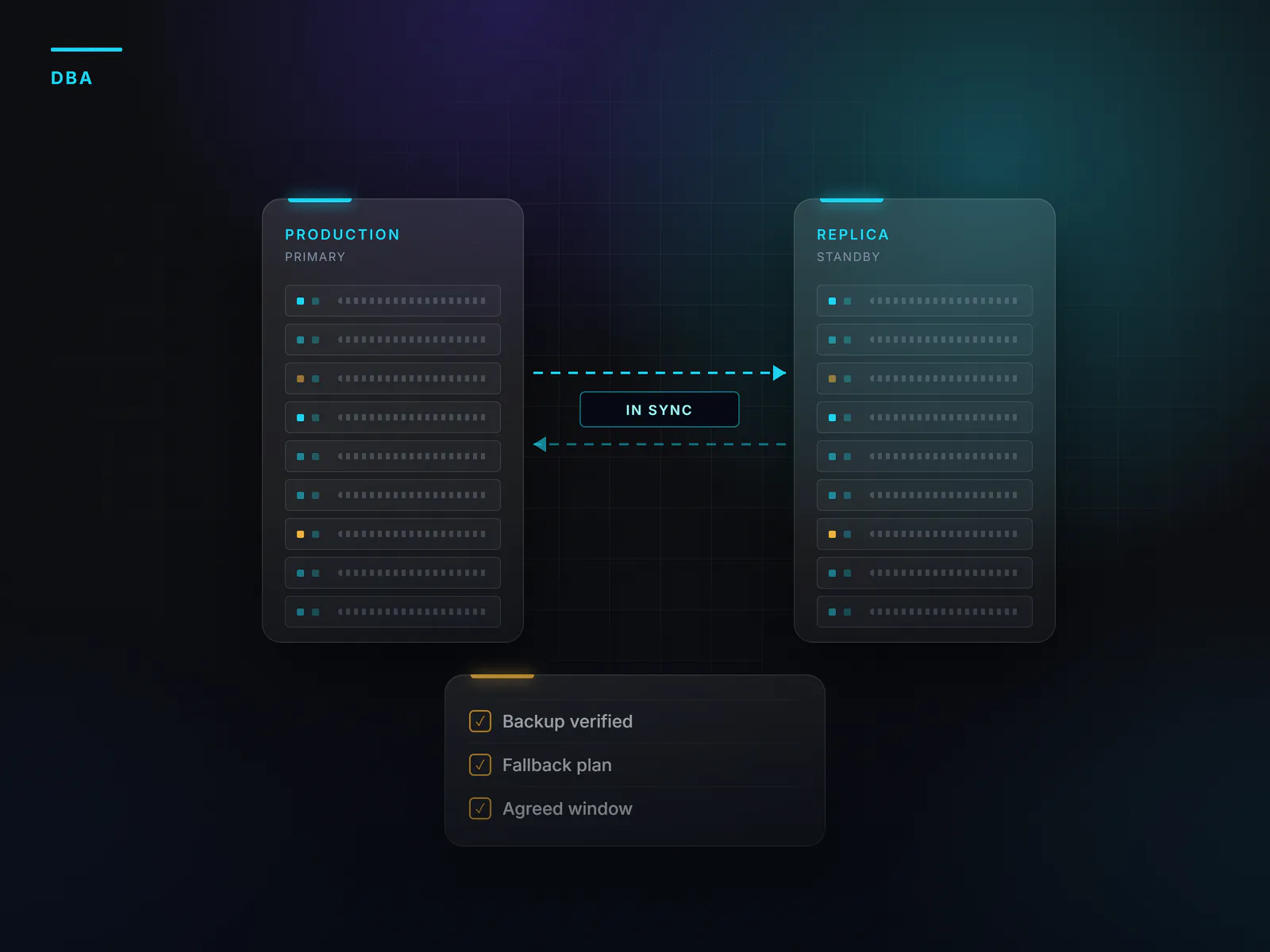
Downtime can be reduced to a short window decided in advance, but it cannot be eliminated. With continuous replication of the data to the new system, the switchover is limited to the moment when the applications connect to the new target and the checks are run. How short it is depends on the edition, platform, data volumes and applications. Some replication techniques need separate licences, and we tell you so beforehand.
Should we stay on our own servers or move to the cloud?
It depends on total cost, licences, performance and data constraints. The cloud takes away hardware management, not database management, and it changes how licences are counted. We compare the options on the same figures: subscription fees, licences, network, backups and migration downtime. Sometimes the best choice is to stay, with a new server.
Can you help us with Oracle licensing?
On the technical side, yes. We work out which editions, options and features are installed and in use, and we configure the database so that it does not use anything your licences do not cover. On the contractual side, no. Interpreting contracts and negotiating with Oracle remain with your lawyer and whoever manages your relationship with Oracle. We give them the technical data.
How much does it cost?
It depends on the scope: how many databases, which versions and editions, how much routine work and which projects. There is no price list that fits everyone. The first conversation carries no commitment. If there is work to be done, you receive a written proposal for the initial assessment, usually one or two days of work with the people involved. After the assessment comes the proposal for the project, with phases, timing and costs.